Good. you’re not alone.
You’ve been holding a lot for a long time. You don’t have to keep carrying all of it by yourself.
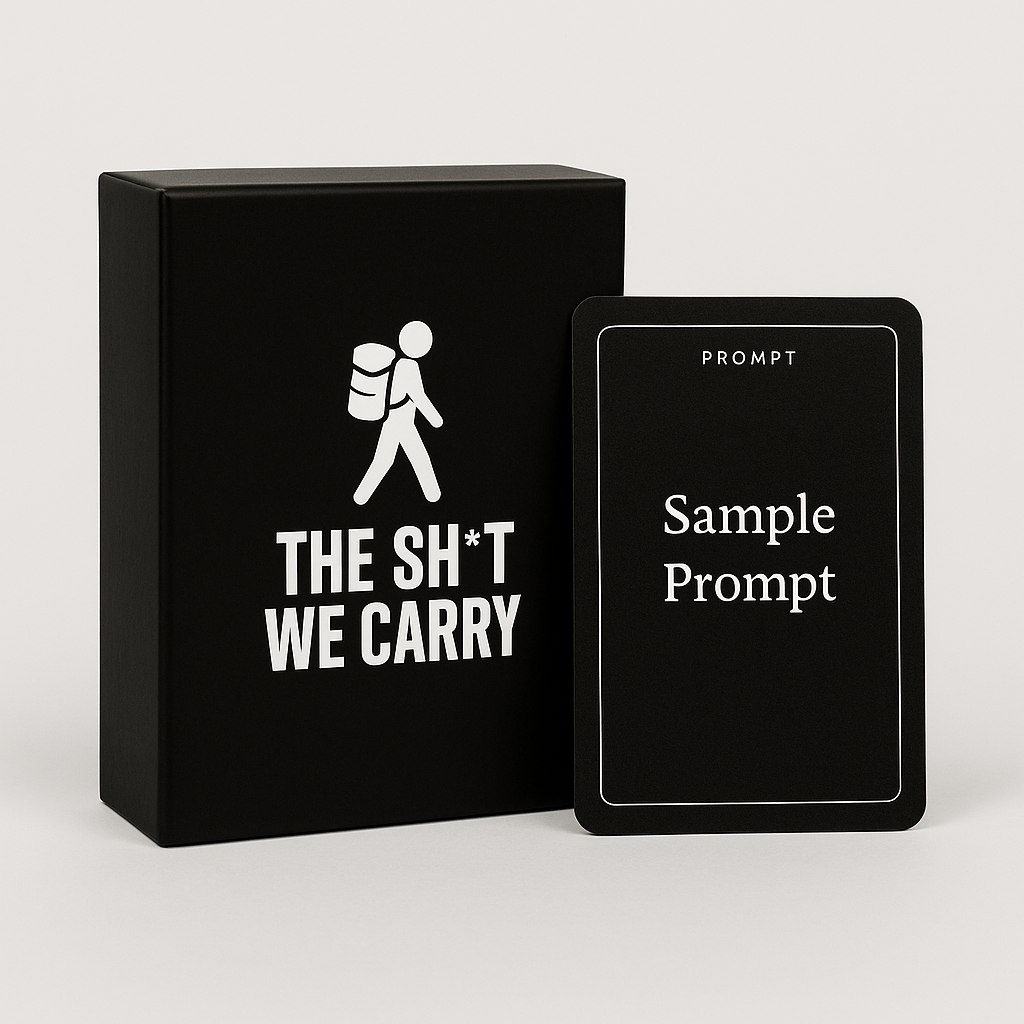
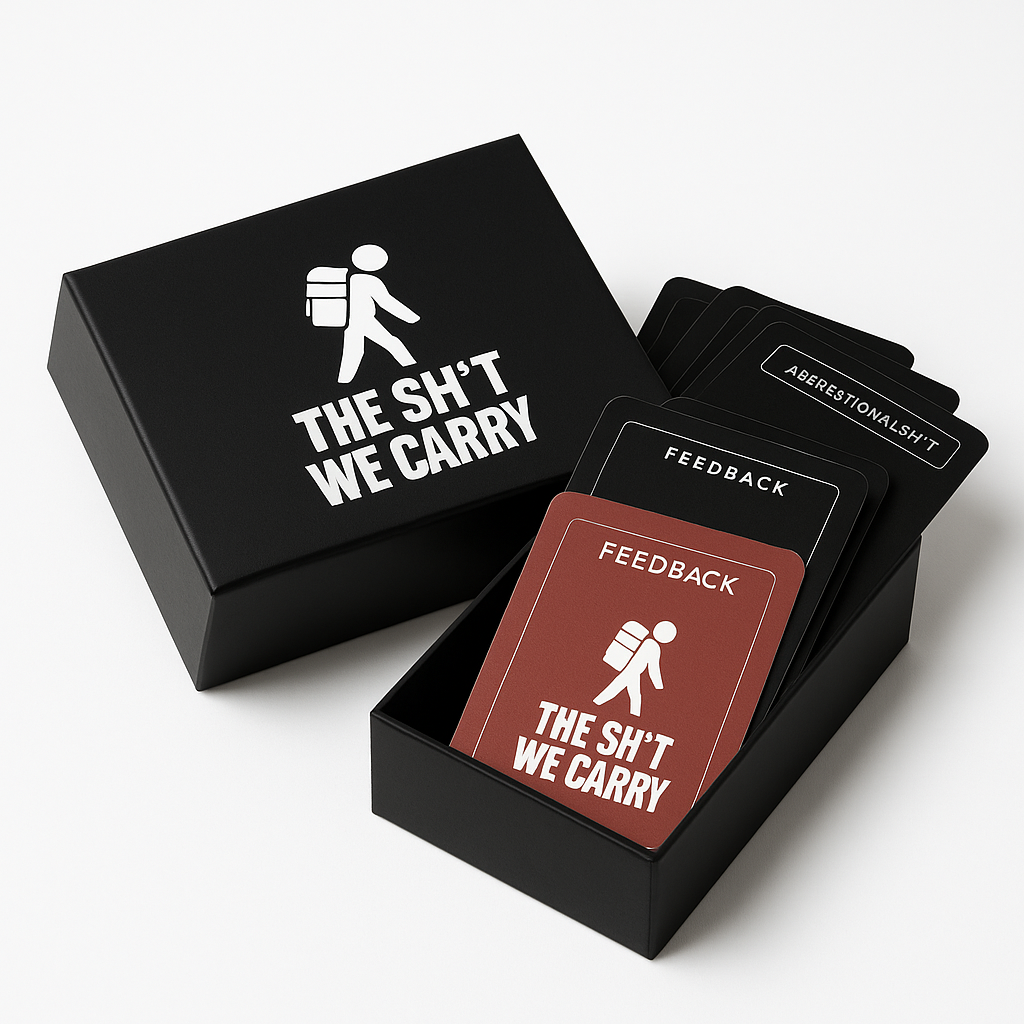
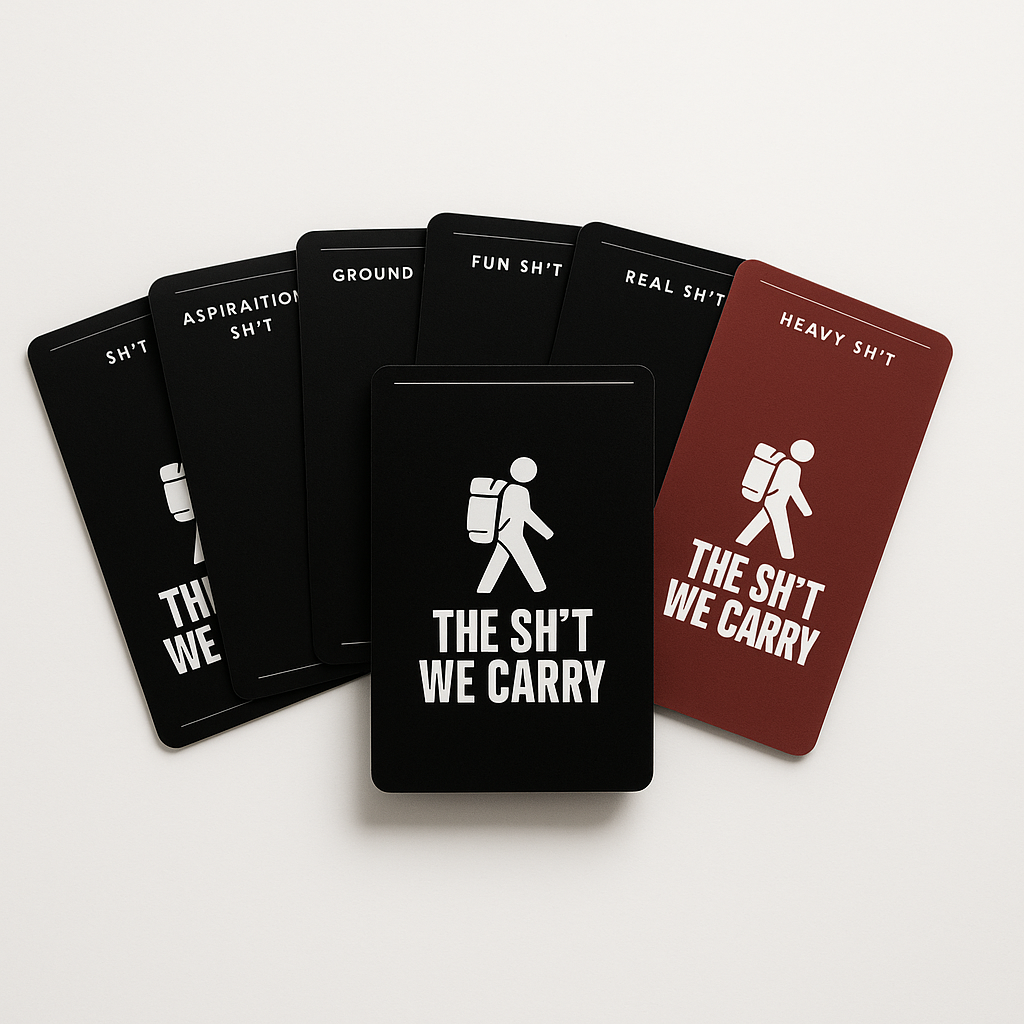
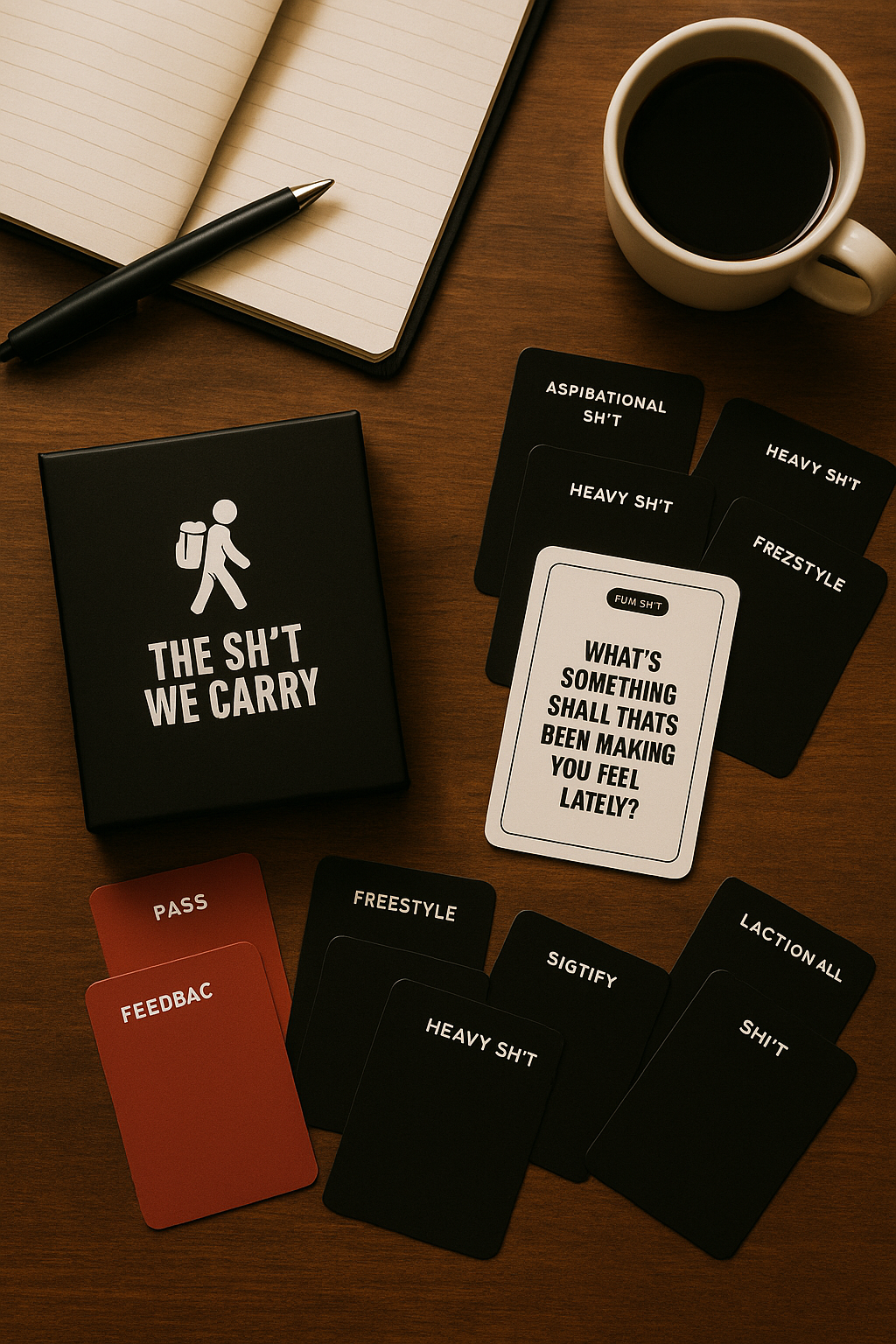
next, start by unloading with the sh*t we carry Card deck
Here’s your next step
The cards are designed to spark connection and keep it safe
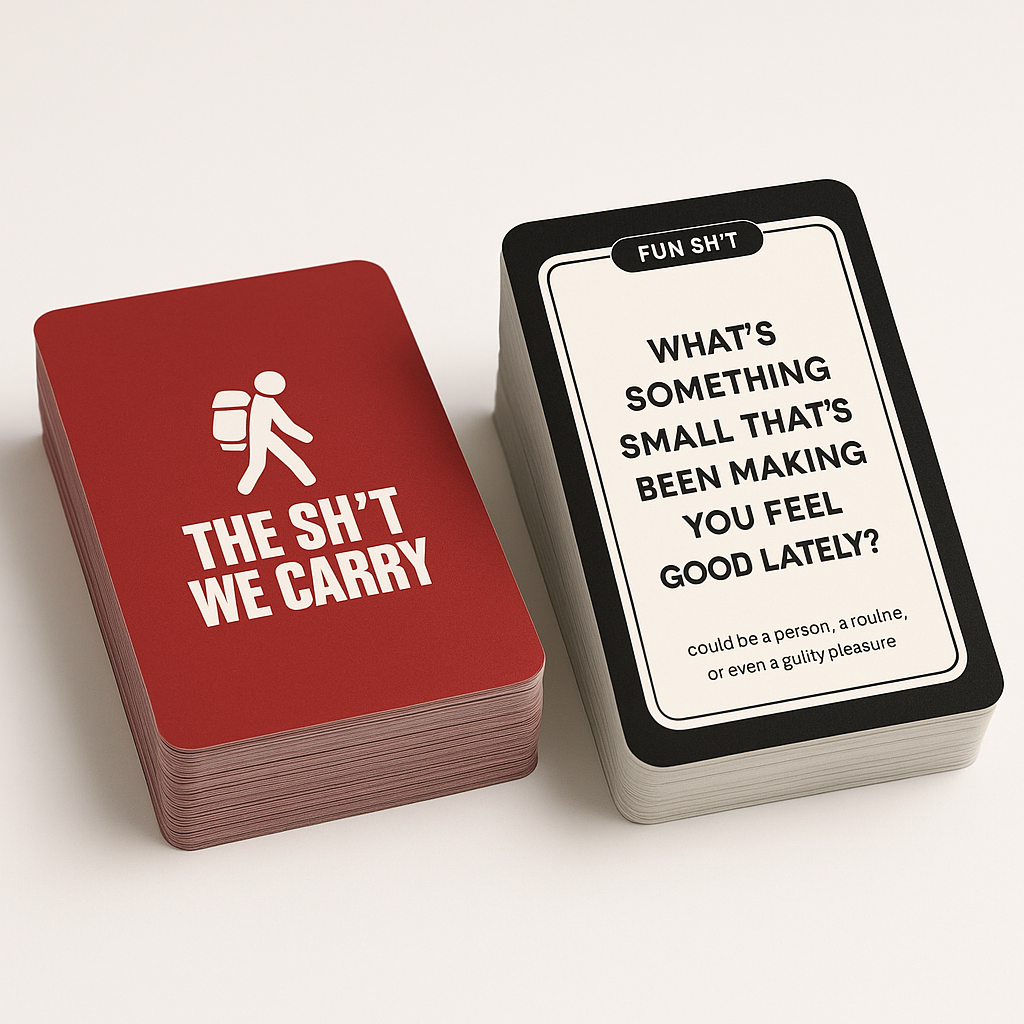
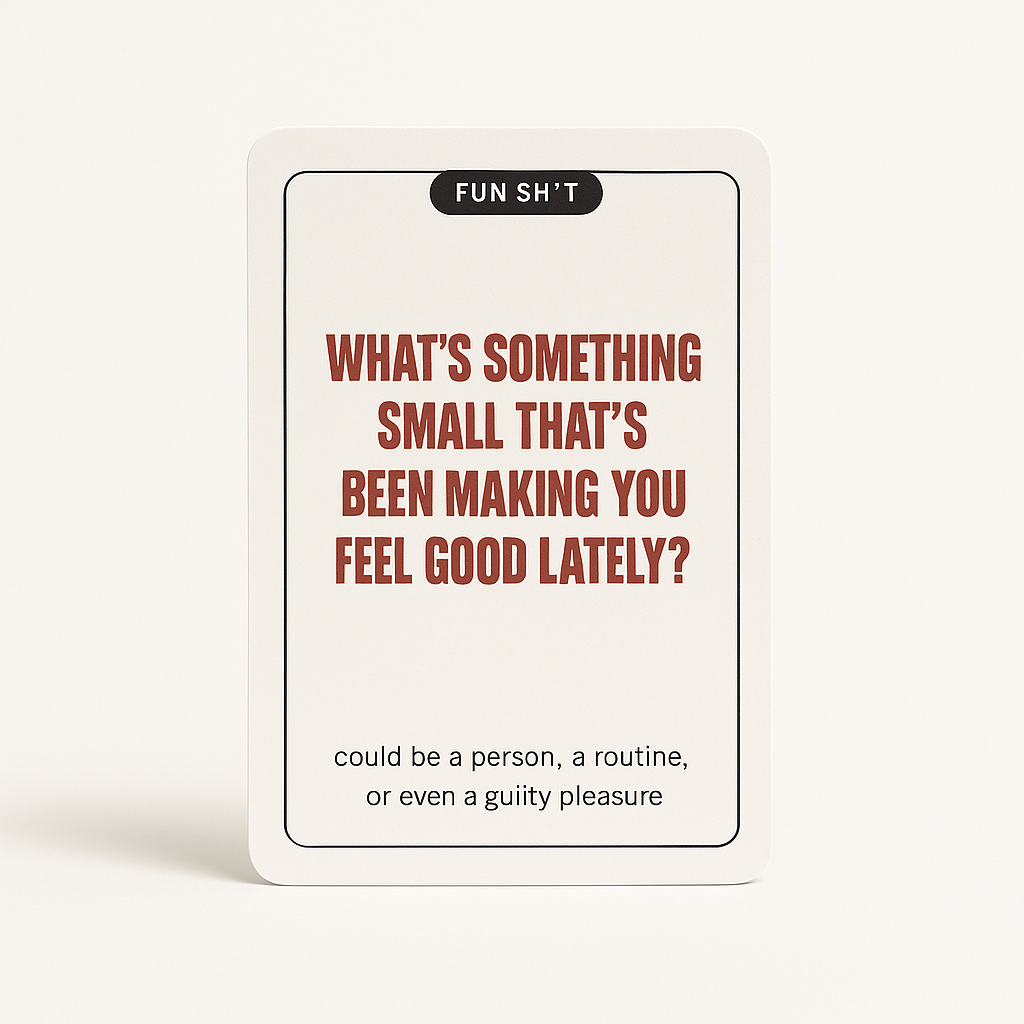
What's something small that's been making you feel good lately?
could be a person, a routine, or even a guilty pleasure
Level 1: The Fun Sh*t We Carry
"When safety comes first, sharing comes easier"
The ScienceWhen people laugh or feel relaxed, their bodies stop acting like something bad is about to happen. Their heart slows down, their brain stops being on high alert, and they feel safer around others.
If you feel safe, talking is easier. This level establishes psychological safety through low-stakes positive sharing, activating the parasympathetic nervous system and building trust before vulnerability is requested.
What's one thing you're reaching for right now, and what's the weight you feel holding you back?
dreams and obstacles in the same breath
Level 2: The Aspirational Sh*t We Carry
"Hope rewires the brain for possibility"
The ScienceThinking about your goals and who you want to become makes your brain feel stronger and more hopeful. When people feel hopeful, they're less scared to talk about real stuff because they remember they're not broken—they're growing.
Future-oriented thinking activates the brain's reward centers and strengthens self-efficacy. This level introduces manageable vulnerability by pairing aspiration with acknowledged barriers, normalizing struggle as part of growth.
What's something you've been holding in because you don't think people would get it?
(anger, grief, confusion, pressure, guilt)
Level 3: The Real Sh*t We Carry
"Shared struggle dissolves shame"
The ScienceWhen you hear other people talk about their everyday struggles, your brain goes, "Wait… I'm not the only one?" That feeling makes embarrassment shrink and connection grow. It becomes way easier to be honest.
Social comparison and normalization reduce perceived isolation. This level leverages universality—a core therapeutic factor—to create permission for authentic emotional expression without diagnostic framing.
What's a piece of yourself you feel was stolen?
(childhood, innocence, trust, sense of safety)
Level 4: The Heavy Sh*t We Carry
"Trauma processed in safety becomes strength"
The ScienceTalking about hard things like loss or scary moments helps your brain sort them out instead of keeping them in a messy pile. But you can only do that safely when you trust the people around you.
Narrative exposure and meaning-making facilitate trauma integration. This level requires established safety and witnessing—the group becomes a container for processing without pathologizing, allowing cognitive reappraisal in a supportive context.
What's one thing you survived that proves how strong you really are?
(addiction, loss, betrayal, depression)
Level 5: The Grounded Sh*t We Carry
"Integration stabilizes transformation"
The ScienceAfter big feelings, your brain needs to chill. This is the steady stuff that keeps people going: what mattered, what helped, what they're leaving with. Thinking about what grounds you helps your body chill and makes the good sh*t stick.
Consolidation and resource-building close the therapeutic arc. This level anchors gains through resilience reflection and strengths identification, activating gratitude circuits and reinforcing self-concept shifts.
SAY SOMETHING REAL THAT DOESN'T FIT ANY OF YOUR CARDS.
Keep it kind + supportive & no advice, no fixing, no stealing the moment.
Freestyle Card
"Autonomy within structure builds trust"
The ScienceSometimes what you need to say doesn't fit a prompt. This card gives you permission to speak outside the structure while still honoring the group's boundaries.
Offering controlled flexibility within a safe container increases psychological safety and agency. It prevents the structure from feeling restrictive while maintaining the trauma-informed boundaries that keep everyone safe.
"I'm stepping out for a moment. I'll be back shortly."
This card protects autonomy. Zero explanations required. Zero interrogation allowed.
Time-Out Card
"Self-regulation is a protective skill"
The ScienceWhen emotions get too big, your body needs space to reset. This card lets you step away without shame, explanation, or pressure to stay.
Teaching self-regulation and exit strategies prevents re-traumatization. When people know they can leave without consequence, they paradoxically feel safer staying. This card embeds consent and bodily autonomy into the game mechanics.
"How would y'all respond to this? Or what would this look like for you?"
This lets the group offer examples, interpretations, or a sample response. No one answers for the player; they just spark ideas.
Help Me Out Card
"Modeling without prescribing expands possibility"
The ScienceSometimes you need help accessing language or examples without someone telling you what to feel. This card invites the group to offer possibilities without taking over your story.
Peer modeling activates observational learning while preserving individual agency. The group becomes a resource bank of lived experience without imposing solutions, which is especially critical for populations who've been over-managed by systems.
"Yeah, this card ain't it. I'm swapping this sh*t out."
Trade out a prompt card you hate for a fresh one.
Swap Card
"Choice reduces coercion"
The ScienceWhen a prompt feels wrong, forcing engagement creates resentment and disengagement. This card gives you a way out without judgment.
Perceived control over one's experience is a core component of trauma-informed care. The Swap card operationalizes choice, signaling that the game respects your boundaries and won't force vulnerability you're not ready for.
"What you said hit strong. I'm still here with you—just passing on responding."
Use when you don't have anything to add but still want to honor what was shared.
Pass Card
"Presence without performance is valid"
The ScienceSometimes the most respectful response is silence. This card lets you witness without feeling pressured to perform a response you don't have.
Removing the expectation to "fix" or "respond" reduces performative empathy and allows authentic presence. It teaches that bearing witness—simply being there—is itself a valuable form of support, especially in trauma processing.
Thanks for sharing… the fact that you ______ and didn't fold, shows…
(name the strength they might not see or believe)
Feedback Card
"Reflection without fixing builds agency"
The ScienceThis is one example of feedback cards players hold in their hand. Each feedback card models a different way to witness and respond—acknowledging what someone shared without trying to solve, fix, or minimize it.
Strengths-based feedback activates positive self-schema and challenges negative core beliefs. By naming resilience in concrete terms, feedback cards help players reframe survival as evidence of capacity, not damage. Different feedback cards train different witnessing skills.